News
The Latest Travel Industry Updates from the Frontier of AI, GenAI Video, and Immersive Gaming
- November 10, 2025
AIR NEW ZEALAND’S BOLD ARTIFICIAL INTELLIGENCE VISION
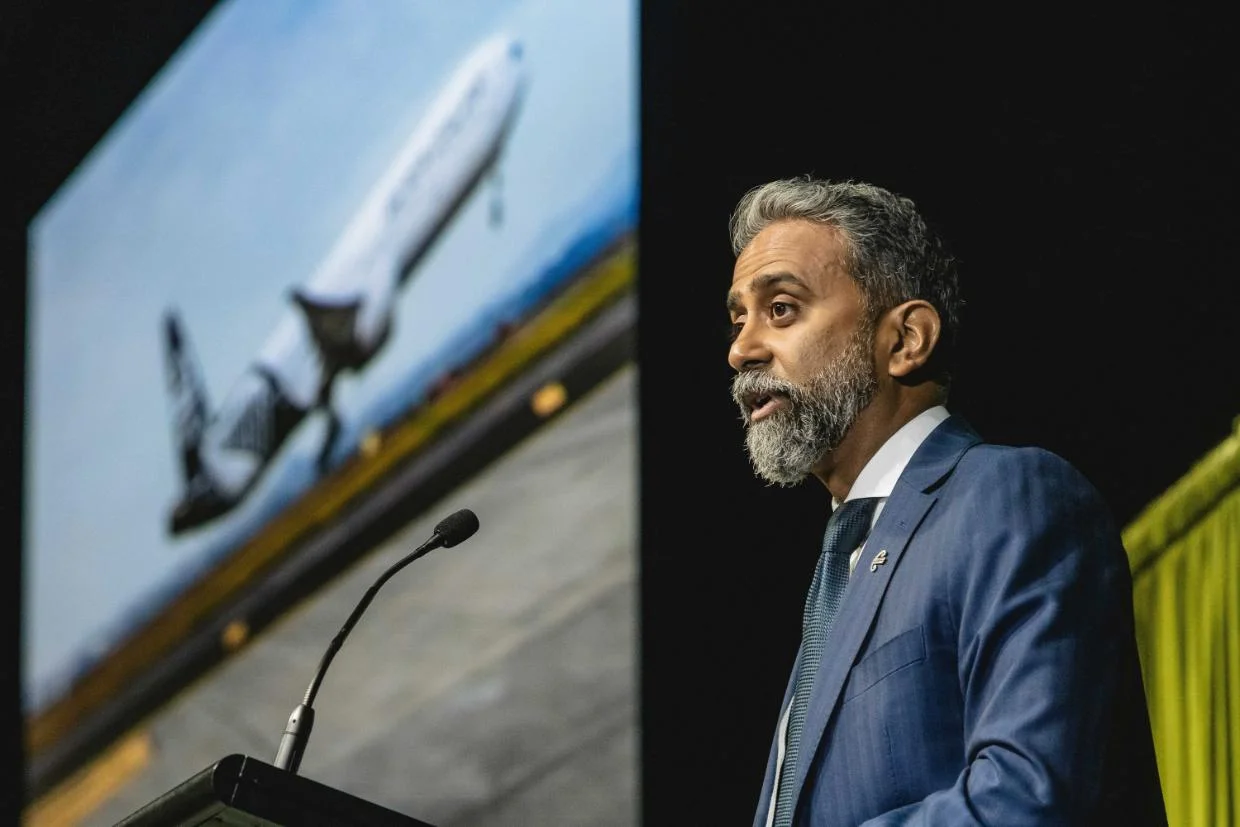
Air New Zealand chief executive Nikhil Ravishanka
OPINION: Air New Zealand’s new chief executive, Nikhil Ravishankar, says the big clue to the future of flying lies in the airline’s regional operation.
He envisages an airline leading its peers in adopting artificial intelligence which removes friction from the flying experience, and achieves efficiency to keep a lid on prices, again in the spotlight on regional routes.
‘’For me the clue is back to the future in a way. I love travelling on our regional network because you walk up to the aircraft, put your bag down, and sit in the seat. It takes off, you land, the job’s done. Why can’t international travel be like that?’’
Now, many of the four billion passenger journeys around the world each year are unique in transport for the number of pain points along the way due to strict safety and security requirements. But the enormous power of AI will change this, he says.
‘’A lot of the aviation system is built around a zero trust principle. And that means we all put ourselves through a lot of discomfort to make sure that it’s safe and that’s valid. But if we employ AI and technology sensibly, we could get all of those outcomes without necessarily having to go through all of that process.’’
In what is the modern Air New Zealand era (post the 2001 Ansett collapse), four of his chief executive predecessors have been known for different ways of building the airline; Sir Ralph Norris for recovery built on a customer emphasis, Rob Fyfe for marketing and innovation, Christopher Luxon for commercial drive and Greg Foran for Covid survival and then revival.
Ravishankar brings new skills, a specialised tech, infrastructure and transformation background at a time when airlines are increasingly sophisticated and complex technology companies.
“We’ve got this incredible opportunity to reimagine what the world’s leading AI-powered airline will look like,” he says. “The challenge for us is how to use AI to amplify humanity — to make Air New Zealand’s unique service even more personal, not less.”
For customers, that could mean a radical overhaul of air travel. Ravishankar imagines passengers gliding through airports without queues, paperwork or even baggage counters.
“Imagine getting to the airport where there’s no check-in counter, no baggage hall. As you walk in, your biometrics are verified, your bag is remotely weighed and cleared, and you move straight to the gate,” he says.
AI, biometrics and automation would combine with border and biosecurity systems to assess risk in real time, creating what he calls a “zero-friction” travel experience.
But what happens if digital systems fall over, as happened with Microsoft systems around the world last month?
Ravishankar says staff will always be available. He stresses that his vision of the airport experience isn’t some dystopian dream.
“I don’t ever envision a world where you never meet an Air New Zealander when you travel,” he says.
“The people we have should focus on taking the anxiety out of travel — not on processing paperwork or fighting systems.”
The airline is already partnering with SpaceX’s Starlink to deliver ultra-fast in-flight wi-fi and that service will continue to improve, which will allow passengers to work, plan or shop more during their flight.
“You’ll be able to plan your arrival, order groceries, and have them waiting when you land,” he says.
Ravishankar was brought on board to Air NZ during the second Auckland Covid lockdown, and dived deep into a tech rebuild while dealing with vaccine mandates, border re-opening and mountains of misplaced baggage. He was at the airline’s executive frontline for much longer than his CEO predecessors during some challenging times.
The airline’s re-developed app was an early win and its functions will be extended soon to allow passengers to do more rescheduling themselves if flights are disrupted.
Bad weather disrupted more than 205 domestic flights last month but passengers who wanted to change the new flights selected by the airline were able to use the new app feature to rebook themselves. Ravishankar says working through the disruptions took two days, something that would have taken up to three weeks previously.
The airline is going to soon extend self-booking after disruption to international flights.
The tech rebuild has also allowed the long-awaited rollout of changes to the Airpoints loyalty scheme to better reward high tier members. An announcement on that is imminent.
Air New Zealand has had up to 20% of its jet fleet grounded due to global engine maintenance problems and the aviation system is still beset with supply chain issues.
Ravishankar says AI could transform how engines and aircraft components are designed, tested and maintained, allowing manufacturers to simulate thousands of scenarios before a problem ever occurs.
“AI will fundamentally change manufacturing as we know it. You’ll be able to iterate through fan blade designs or simulate real-world environments in ways that aren’t possible today. That means fewer surprises and safer, more reliable aircraft.”
Air NZ remains one of the country’s most desirable employers with 66,000 applicants for 1400 jobs last year and keeping its preferred workplace status is something that’s a core five-year goal of Ravishankar.
But does more AI efficiency mean a cut to the 11,500-strong workforce? He says by industry standards the Air NZ workforce is lean, and when aircraft are back in the air and new ones join the fleet, staff will be more efficiently used.
“We’re already a highly productive airline — we do a lot with less because we have to,” he says. “This isn’t about having fewer people, but about our people doing more of what matters.”
Now was not the time to take the ‘’sugar hit’’ of cutting jobs, a choice made following hard lessons learned during the pandemic.
‘’If you shrink to the capacity you have, when the additional capacity arrives it takes an inordinate amount of time to rebuild to that.’’
Air NZ is a big target for politicians – particularly those who see mileage in highlighting high fares and any lack of service in the regions.
A year out from the next election, he’s relaxed about the political mood, saying he sees good alignment between the airline and MPs who represent taxpayers who own 51% of the airline through the Government’s stake and many more private shareholders. But he’s conscious of the continued spotlight in high fares, particularly those booked late.
‘’Pricing is as high as it’s ever been. Prices have gone up above inflation, that puts pressure on our customers.’’
It would now be a case of dealing with costs – airport and agency costs have soared, as have aircraft and parts.
‘’I think ensuring that we’re running these costs under control and are not above the general rate of inflation. That’s going to be the most critical ingredient to keeping air travel affordable.’’
BRUCE MACKAY / The Post
Destinate creates professionally produced cinematic AI videos for major openings, launches, and pre-debut campaigns. Using a hybrid approach that blends GenAI, real-world assets, and creative direction, we help brands bring destinations, developments, and experiences to life before they open.
QUICK LINKS
SUBSCRIBE
To Our Ready, Player, Travel Newsletter Today
LOCATIONS
- NORTH AMERICA Los Angeles, USA
- LATIN AMERICA Mazatlán, Mexico
- ASIA Hong Kong, SAR